
Hair foil emboss patterns compared
Hair foil is embossed in four common patterns: orange-peel, honeycomb, diamond and random-dot. They differ in the shape and depth of the texture, and in how far a foil slides on wet hair, which our grip test measures against smooth foil. The table sets out what each pattern is and whether we make it.
Pattern comparison
Each row is one surface: what it is, and whether we make it.
| Finish | What it is | Availability |
|---|---|---|
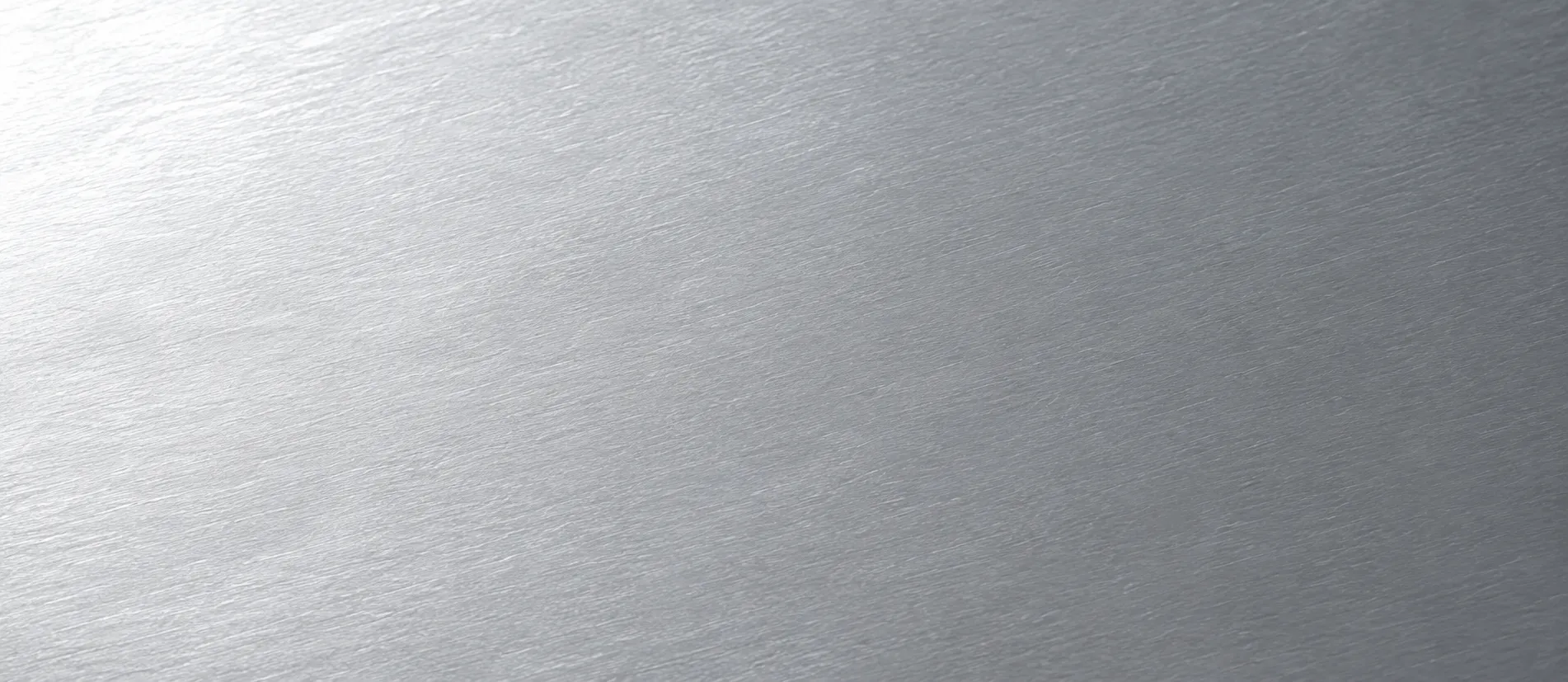
| Smooth | Flat, unembossed foil surface. | Available |
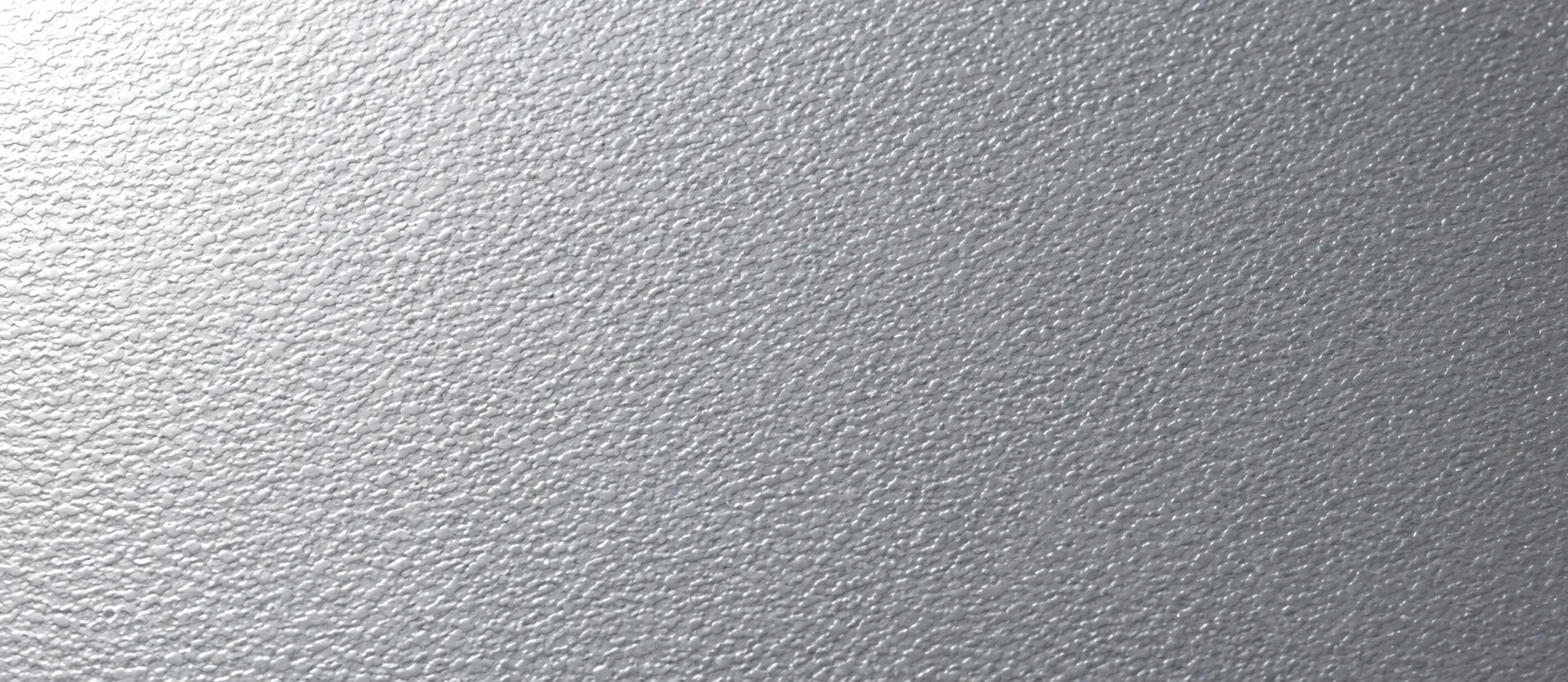
| Orange-peel emboss | A fine, irregular pebbled texture, like the skin of an orange. | Available |
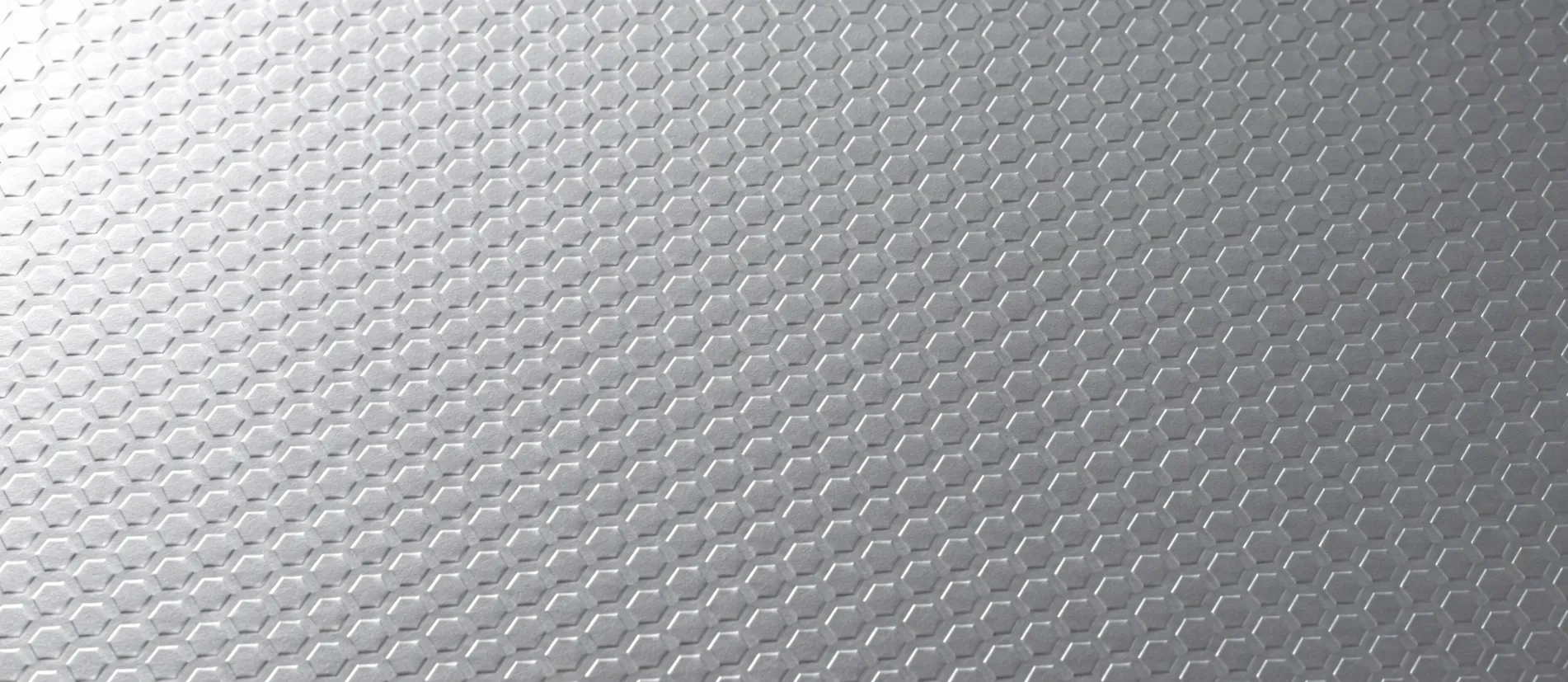
| Honeycomb emboss | A repeating hexagonal cell pattern pressed into the foil. | Available |
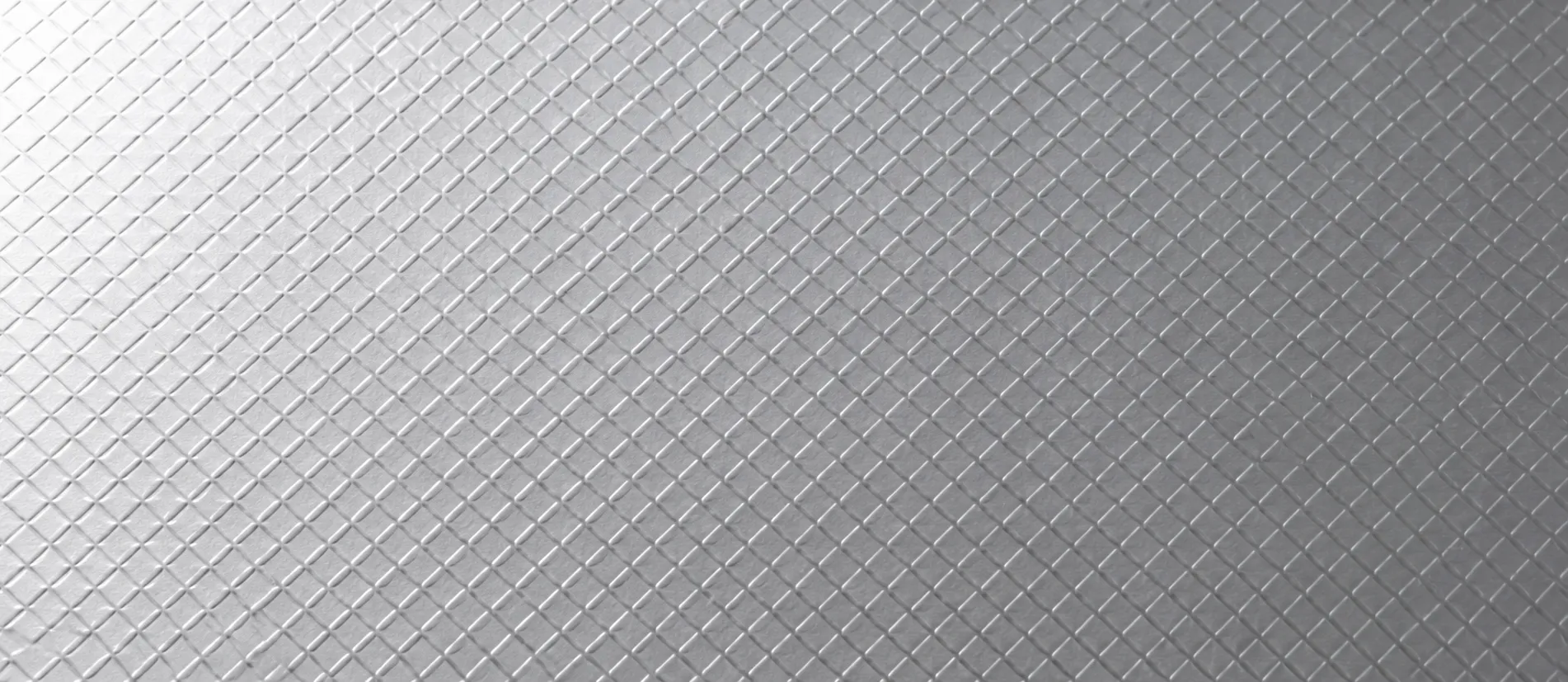
| Diamond emboss | A repeating diamond pattern pressed into the foil. | Available |
| Random-dot emboss | Small raised dots in a non-repeating layout. | Available |
Smooth foil is the baseline. It has no texture, and it is the surface every pattern is compared with in the grip test. Patterns are compared by photograph and by test rather than by a depth figure: emboss depth is hard to measure consistently on thin foil, and the close-ups below show the texture more usefully than a number would.
How grip is tested
Grip is a claim that is easy to make and rarely measured. Our test holds everything constant except the surface of the foil.
Grip / slip
- What it checks
- Does embossing reduce slipping?
- How
- Place a wet hair swatch and the foil on an incline; measure how far the foil slides. Embossed and smooth foil of the same thickness are compared.
Three points limit what the test shows. It uses one hair type and one amount of water, so it ranks the patterns against each other under those conditions and does not predict a slide distance in a salon. It measures the foil against hair, not foil against foil in a stack of placed foils. And it is run on foil of one thickness, because stiffness changes with gauge.
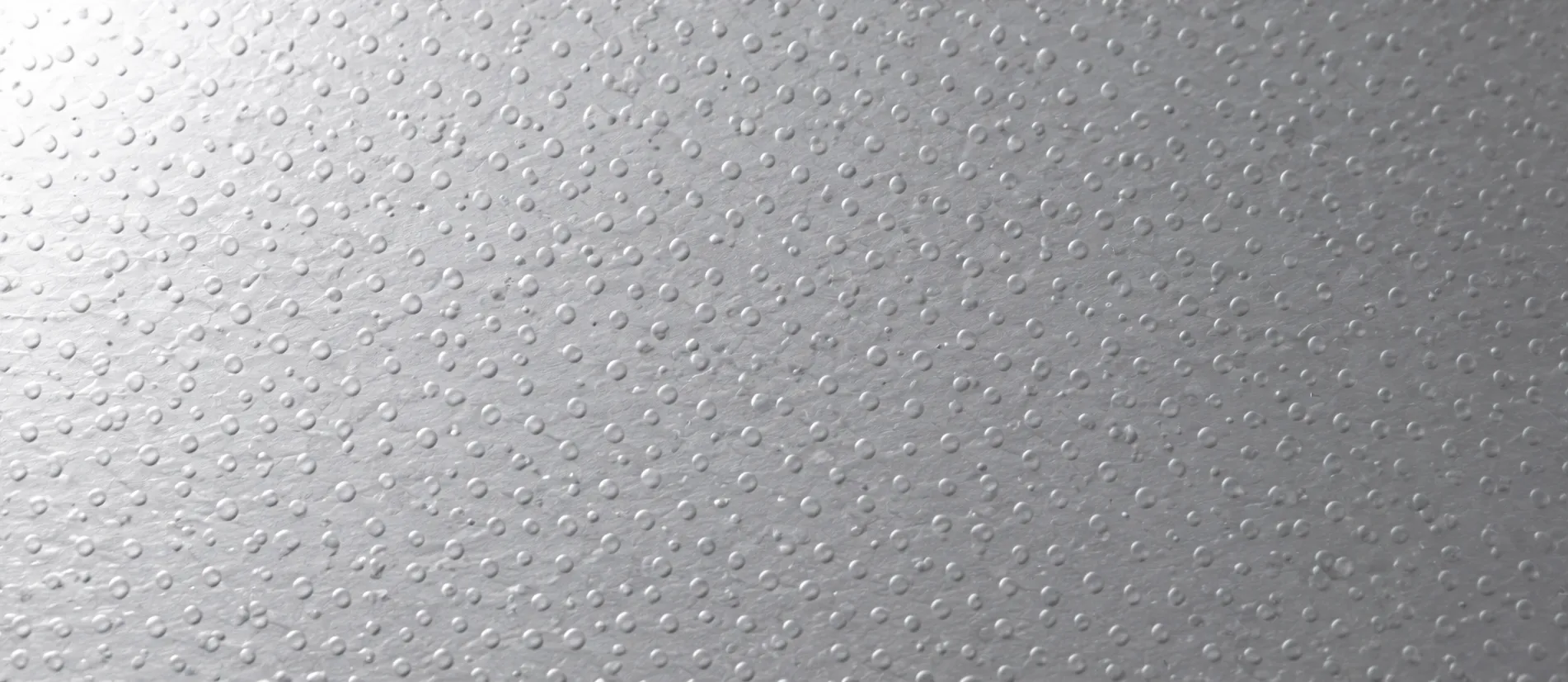
Close-ups
The photographs below are taken at one magnification under one side light, so that the patterns can be compared by eye.
Choosing a pattern
A pattern is chosen on three grounds, in this order.
- The technique. Work that loads the foil heavily and folds it wet gains most from a texture. Very fine weaves are often done on smooth or lightly textured foil, which lies flat.
- The thickness. A texture stiffens the sheet. On a light gauge, embossing gives body without a heavier foil; on a heavy gauge the gain is smaller.
- The brand. The pattern is visible and can be felt, so it is part of how a range is recognised. A printed design reads differently on each pattern; see printed and coloured hair foil.
Embossing is available on the pop-up, pre-cut and roll formats. The purchasing details, including which patterns are in current production, are on the embossed hair foil page.
FAQ
Which emboss pattern grips best?
Hair Foil Factory's grip test places a wet hair swatch and a foil on an incline at a fixed angle and measures how far the foil slides, for each pattern beside smooth foil of the same thickness. To compare patterns on your own technique, ask for samples of two patterns in the same thickness.
What does honeycomb embossing do?
Honeycomb embossing presses a repeating pattern of hexagonal cells into hair foil. The raised cell walls increase friction against the hair and against the next foil, and they stiffen the sheet. The cells also hold a little product in place, which helps when the foil is folded.
Does embossing make foil weaker?
Embossing does not remove metal, so an embossed hair foil contains the same aluminium as a smooth foil of the same gauge. It bends the foil into a texture, which makes the sheet stiffer. Hair Foil Factory runs its wet tear test on smooth and embossed foil to compare the two.
Is smooth foil ever better?
Smooth hair foil is preferred by some colourists for very fine work, because it lies flat against the section and shows the placement of the product clearly. It is also the lowest-cost surface, since it skips the embossing step. Smooth foil is the baseline in the grip test.